
This article provides a window into the mind of Zdzisław Beksiński, one of the most prominent and noteworthy Polish painters of the twentieth century, and an overview of his breathtaking artworks.
Origins
Zdzisław Beksiński (24 February 1929 – 21 February 2005) was a Polish painter, photographer, and sculptor, and the proof that one’s profession need not define one’s true calling.
Born in Sanok, he studied architecture in Krakow from 1947 until 1952, after which he worked as a construction site supervisor, where he used the readily available materials to enter the world of sculpting, not letting his occupation hinder his artistic drive. In the late 1950s, he shifted from sculpting and photography towards drawing and painting. Although Beksiński had no formal art training or education, his architectural background strongly influenced his sense of space and composition. His first breakthrough came in 1964, when an exhibition organized by Janusz Bogucki in Warsaw sold out completely, launching his career as a painter, which would eventually make him the leading figure in contemporary Polish art during the second half of the 20th century.
Medium & Creative Process
Beksiński primarily painted in oil on hardboard or canvas, using thin brushes to achieve a high level of detail. He applied several layers of paint to create complex compositions and subtle tonal shifts. It is also known that he did not sketch or plan his works in advance, preferring to paint intuitively.
The Polish painter spent long hours working alone, often listening to classical music. Painting from memory or inner visions, Beksiński claimed he was not significantly influenced by other artists or popular visual references. He avoided objective assessments of his own works, painting “what came to mind”, leaving the interpretation entirely to the viewer.
Artworks
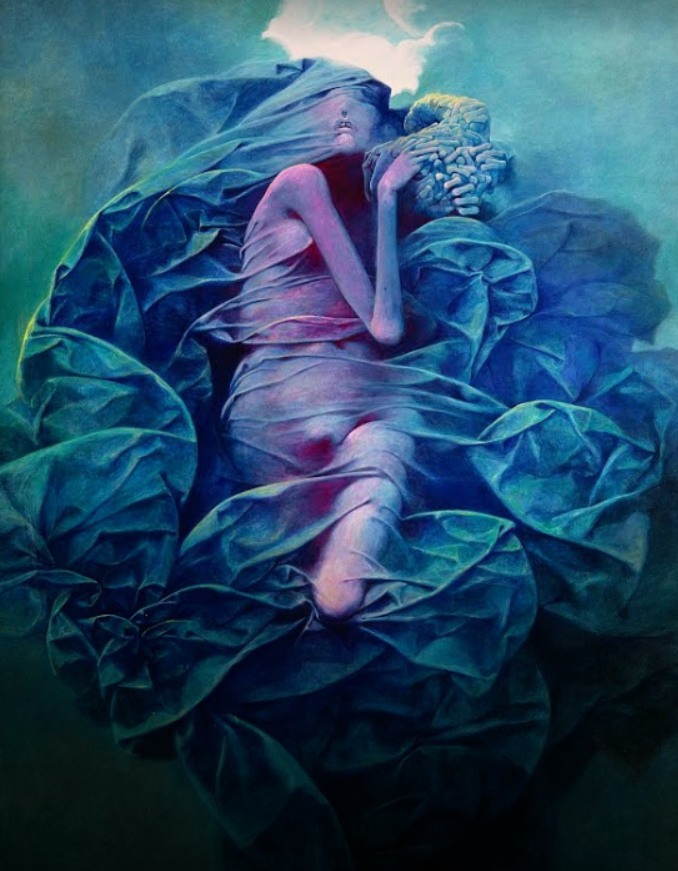
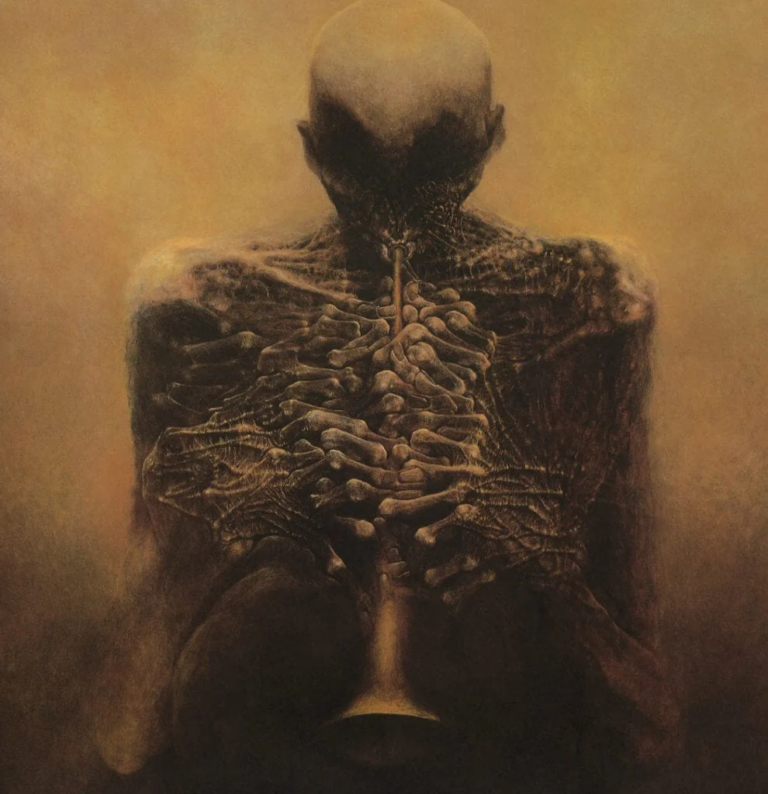
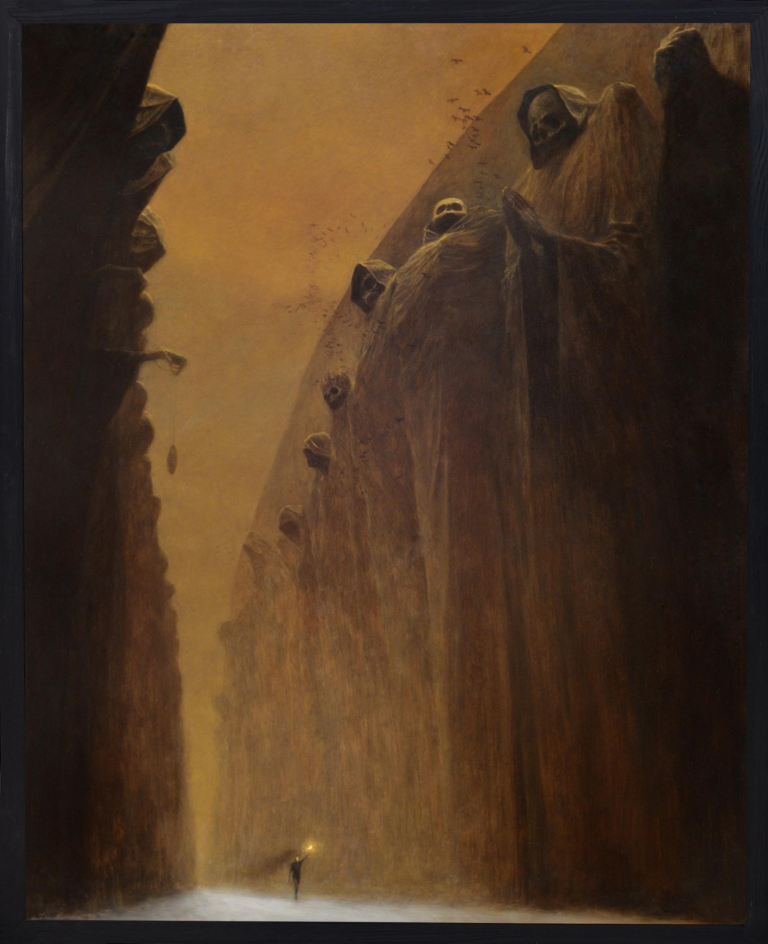
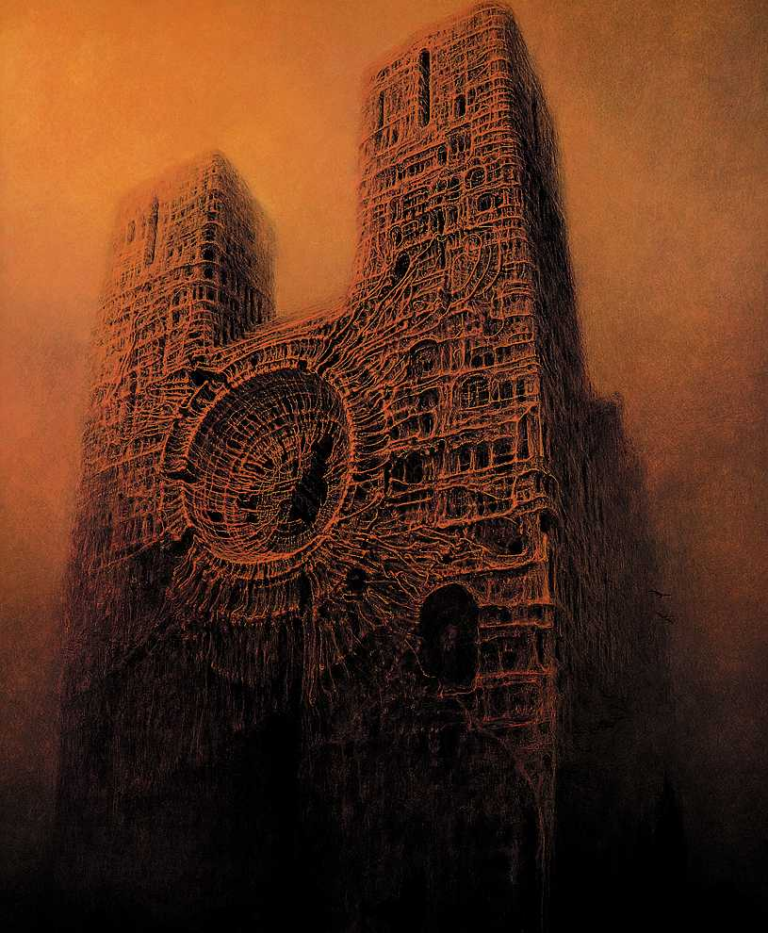
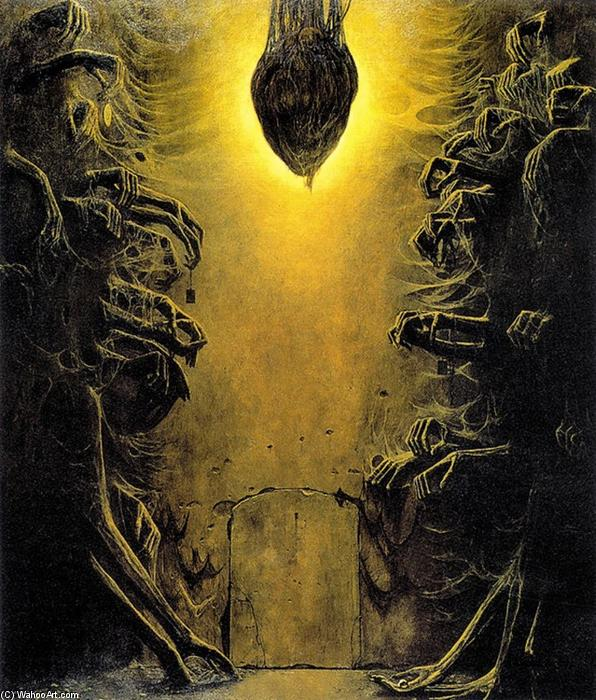
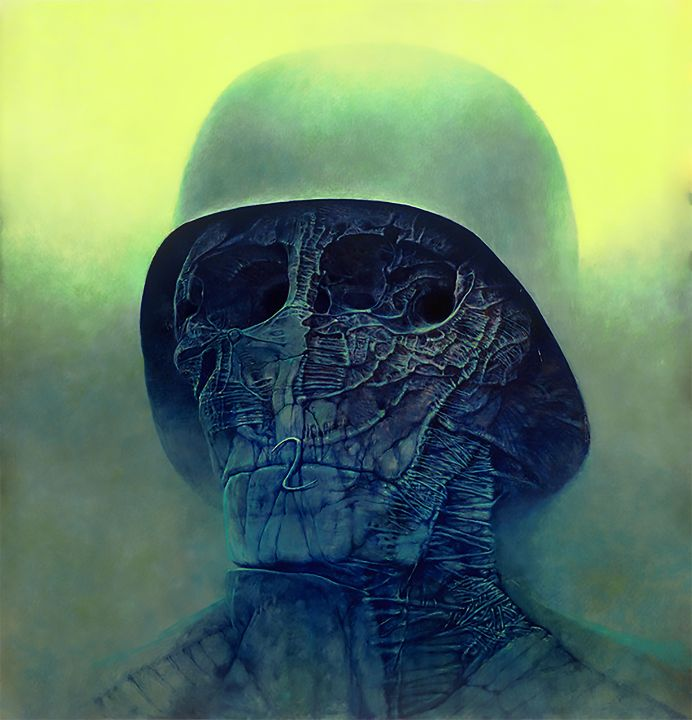
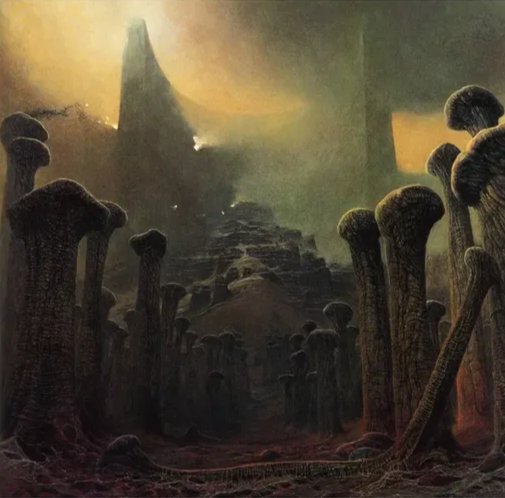
Beksiński developed a highly distinctive painting style which he described as either Baroque or Gothic, while also being strongly associated with Surrealism. His work is intense, immersive, mysterious, somber and even unsettling at times. It sets itself apart on multiple levels:
- The palette: Beksiński’s paintings are very often based on earthy colors such as brown, red, ochre, grays and blacks (while later painting also included blue tones). These accentuate feelings of desolation, grimness and decay, intensifying the emotional impact each artwork has on the viewer.
- The motifs: deserted landscapes, ruined cities, ominous buildings, deformed beings – Beksiński often depicts nightmarish worlds and post-apocalyptic settings in his works, both captivating and terrifying the viewer.
- The composition: the scenes often feel unreal and foggy, as if taken from a dream or subconscious visions. Scale and logic are frequently warped, a typical trait of Surrealism. Beksiński’s attention to detail is also noteworthy – the textures, surfaces and elements all weave together to create complex and awe-inspiring works.
- The meaning: Beksiński avoided symbolism or explanations of his works. He resisted such interpretations as a way to give more importance to the emotional reaction to his paintings rather than any objective assessments.
And you – what is your opinion of Beksiński’s artworks? Do they evoke particular emotions in you?
Let us know down below!
Tags: article, economy, current affairs, tariffs, tariffs explained, trump tariffs
If you enjoyed our content and would like to support us:
We'd love to hear from you
Contact Us
Got any suggestion, recommendation or idea that you would like to share with us? Feel free!